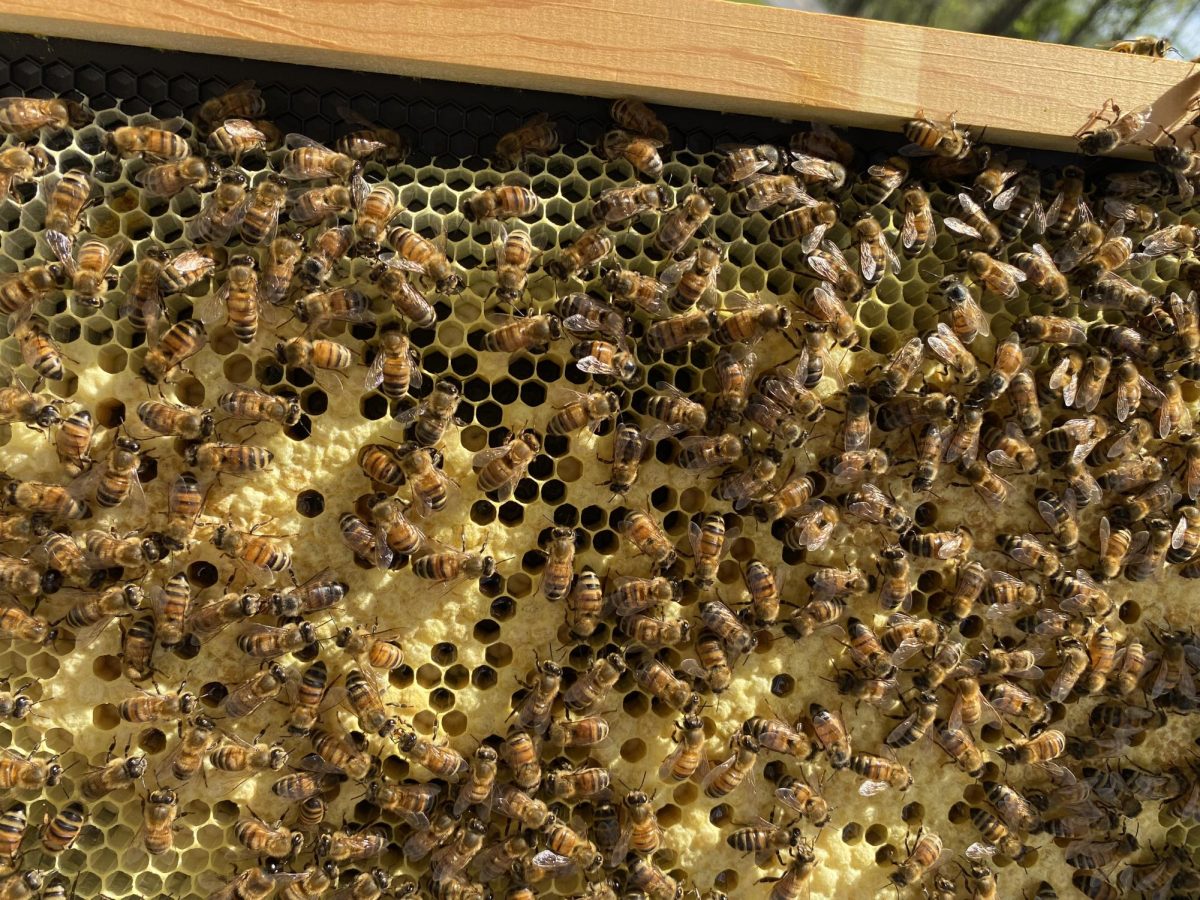
Everyone has a hobby. Whether it’s reading murder mysteries or playing puzzle video games, people’s hobbies are endless and special to the individual. Students often ask their peers what they’re interested in, but has anyone asked the teachers? As it turns out, some of our teachers here at RCHS have pretty unique hobbies, too! Mr. Perry Hardin, who teaches Capstones, Algebra 2, and AP PreCalc, spends his free time beekeeping.
“I got into beekeeping the same way I start many things I do, it just seemed like it would be interesting to do,” Hardin said.
When first starting out, Hardin had to “drive an hour and a half away to the closest place that I could pick [the bees] up.”
“Many colonies abscond in the first few days of moving them,” he said, “which means they all fly away and a container of bees is not cheap or easy to get.”
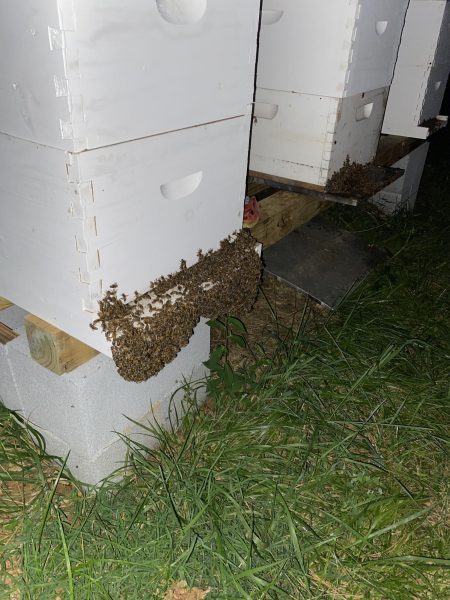
However, acquiring the bees isn’t the hardest task; in spring, “the [bee] colonies naturally want to split. Every few days in April and May I come home to a huge clump of about 20,000 bees hanging from a tree near my hives.” When this happens, Hardin gathers up the spare bees and “either rejoins them with another hive, or lets them make their own new colony.”
Summer is the harvesting season. Usually the main harvest occurs around Independence Day, and will take the entire day.
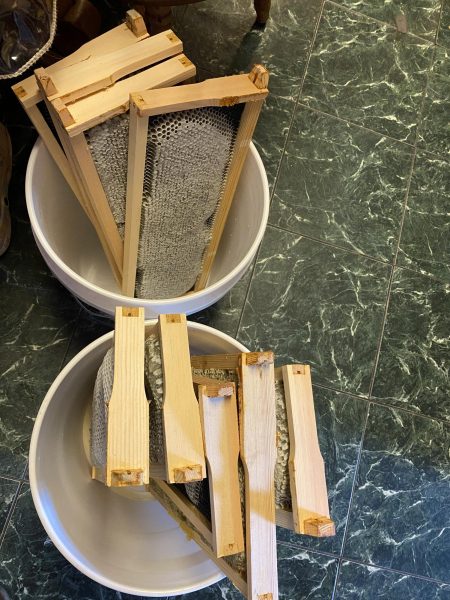
“Frames have to be collected, upcapped, spun and returned to the hives,” describes Hardin. “Honey gets everywhere and it is a messy process. After that comes the summer dearth as rain stops and most flowers aren’t blooming,” Hardin said. When this happens, he has to watch for varroa mites, the “biggest killer of bee colonies worldwide.”
Fall brings the final harvest. This one is faster and easier that the summer one. It features a darker shade of honey in contrast to the summer honey. Hardin said people usually have a preference on which honey they like, but because of the rarity this darker honey has in stores, it is revered as a treasure.
“After that final harvest comes swapping frames around to be sure all colonies are ready for winter and sometimes combining weak colonies so they can survive the winter.”
Hardin said that “starvation and condensation kills colonies over winter so I make a hard candy to put on top of my hives.”
This hard candy or “candy board” both feeds the bees and keeps the moisture levels in the hive low to prevent the bees from drowning. Hardin also lines the hive boxes with foam board insulation to keep the bees warm.
“Colonies need about 50 – 80 pounds of honey to survive the winter,” said Hardin.
“By keeping the hives warmer and feeding them, they use less honey over the winter and can produce more honey in the spring.”
For those who are interested themselves in beekeeping, Hardin tells of a “ steep learning curve,” and he “spent many hours reading and watching videos on Youtube before committing to starting.” “There is also a modest financial investment, so you want to be sure that you do everything right and don’t make expensive mistakes,” said Hardin.
Whether your hobby is something simple like reading or something more involved like car remodelling, RCHS’s teacher Mr. Hardin certainly will “bee” memorable with his beekeeping hobby!
The bees discovering the location of the queen. Video by Perry Hardin