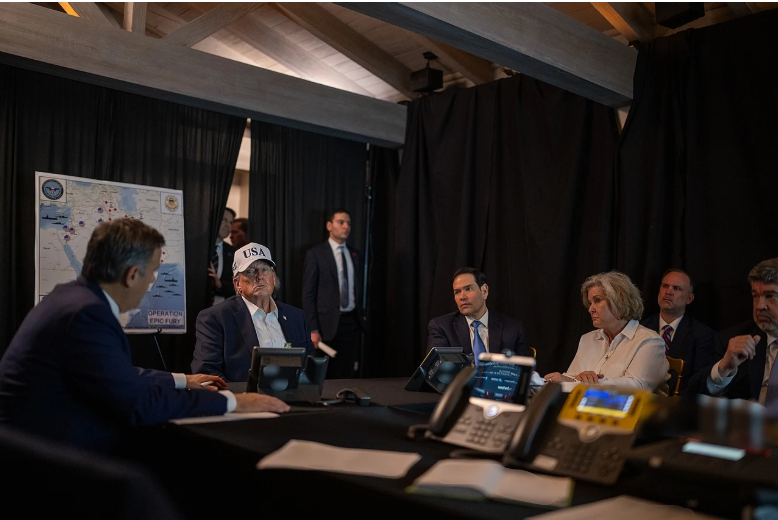
On Saturday, U.S. and Israeli forces launched an air offensive against the Islamic Republic of Iran, which has since escalated into a full regional war. Marked by ongoing American and Israeli airstrikes, and repeated Iranian retaliatory attacks, the fighting has already produced multiple American casualties and major incidents.
The U.S. and Israel launched the offensive late last week, officials dubbing it Operation Epic Fury. The strikes target Iranian military and leadership. Iranian state media and other international reports confirmed the death of Iran’s Supreme Leader, Ayatollah Ali Khamenei, in the opening strikes on Tehran.
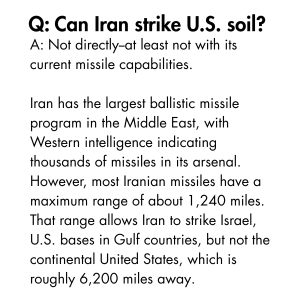
U.S. and Israeli officials claim the strikes were intended to cripple Iran’s military and prevent the country from developing nuclear weapons, similar to a previous round of strikes on Iran’s nuclear R&D facilities last June. Both governments also pointed to Iran’s support for proxy militant groups such as Hezbollah, the ballistic missile program, and Tehran’s violent crackdown on civilian protests as justification. Israeli leaders have long argued that a nuclear armed Iran would pose a significant threat to Israel, while U.S. officials say the operation is to prevent Iran from developing nuclear weapons and destabilizing the Middle East through proxy forces and missile attacks.
Senior Pentagon officials have confirmed that at least 6 U.S. service members have been killed from Iranian missile attacks on American installations in the Gulf region. Reports from other monitoring groups indicate that the joint strikes have caused significant civilian casualties across Iran. Some estimates suggest more than 1,000 civilians have been killed, but the figures have not been verified.
President Donald Trump acknowledged the inevitability of casualties in an eight minute video released at 2:30 AM on Saturday stating “The lives of courageous American heroes may be lost and we may have casualties. That often happens in war.”
The conflict is also having significant economic implications. The fighting has primarily taken place in the Persian Gulf near the Strait of Hormuz, a narrow route through which almost one-fifth of
the world’s oil supply moves. The price of oil has already significantly increased, and Iran has threatened to attack any vessel attempting to move through the Strait. Trump has indicated plans for the U.S. Navy to begin escorting ships through the strait in as soon as two weeks.
Iran backed militia and paramilitary groups across the Middle East, including Hezbollah in Lebanon and other militias in Iraq and Syria, could cause the conflict to expand further. Retaliatory attacks from these groups have already begun. Hezbollah has exchanged fire with Israeli forces along the Israel-Lebanon border, and Israeli troops have launched a ground invasion into southern Lebanon to target the group.
Israeli Prime Minister Benjamin Netanyahu defended the reasoning behind the operation, saying that the strikes were necessary to eliminate the existential regional threat posed by the Islamic Republic.
“Our joint action will create the conditions for the brave Iranian people to take their destiny into the
ir own hands,” Netanyahu said shortly after the strikes began.
Addressing the fighting in Lebanon, Netanyahu warned that “Hezbollah made a very grave mistake by choosing to attack Israel… We will continue to do what is necessary for our defense.”
President Trump also shared the same sentiment as Netanyahu in the aforementioned video, speaking directly to the Iranian public and military, urging them to abandon the theocracy. “Lay down your weapons and have complete immunity, or in the alternative, face certain death,” Trump said. Addressing Iranian civilians, he added,
“When we are finished, take over your government. It will be yours to take… Now is the time to seize control of your destiny.”
This story is rapidly changing as the days wear on, consult official news outlets for the most up-to-date information.