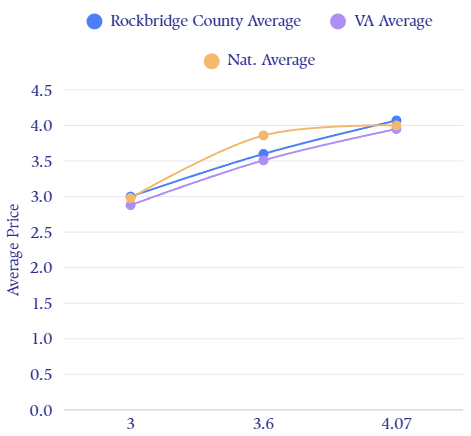
Across the United States, gas prices have risen dramatically, affecting commuters and students who rely on driving to get to school and work. The national average price is now sitting at around $4.00 per gallon, according to data from AAA. This marks a significant increase since late February, when prices were closer to $3.00 a gallon. In Rockbridge County specifically, unleaded gas prices average around $4.07.
The primary reason for the increase is rising global oil prices, primarily caused by fighting in the Middle East and major disruptions to the global oil supply chain. When crude oil prices increase anywhere, gasoline prices rise shortly after b
ecause crude makes up the largest portion of price at the pump. The Middle East produces almost a fifth of the world’s oil, and fighting in the region and the deliberate targeting of oil refineries and shipping routes has disrupted supply, particularly in the Strait of Hormuz, a narrow shipping route where 20% of the world’s oil passes through.
However, most gasoline used in the U.S. is not made from Middle Eastern oil. The United States actually produces more oil than any other country and imports only a fraction from the Persian Gulf. Regardless, prices still rise when oil is bought and sold on the global market. This means if oil becomes more expensive anywhere, American com
panies can sell oil overseas for higher prices, and domestic prices are forced to increase to match the global market. Put simply, the price we pay for gasoline is based on the world price, not just where it comes from, and when oil production anywhere is attacked, or even threatened, markets go up.
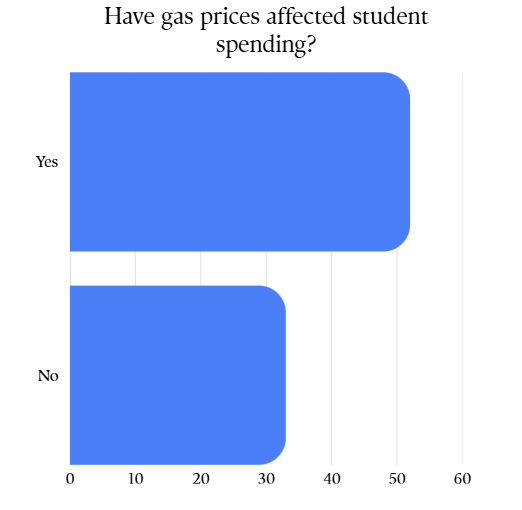
The increase in cost is already changing how Rockbridge students and families make decisions about driving and spending. Many students who have a long commute from the deeper parts of the county say they’re driving less, staying in town longer to avoid having to make another trip, and cutting back on spending just to afford gas.
“If I plan to do something later in the evening, I don’t have the gas money to go home in between…so I’ll often stay in town for three or more extra hours just to avoid the drive home,” said senior Sarah Seay.
Others are beginning to rethink unnecessary trips, and spending on things that aren’t necessary.
“I have noticed myself hesitant to drive somewhere that does not need to be done that day,” senior Harr
ison Tanner said.
The gas hesitation extends beyond the wheel and straight into the wallets of student drivers, forcing spending decisions.
“I feel uneasy about buying things that I want. I want to make sure I have enough money for gas,” senior Maisen McKemy said.
Even students that don’t drive yet are feeling the effects,
“Gas adds up very fast, making my and my family not be able to go out as much, and we have to watch our spending,” freshman Josie Hamilton said.
If gas prices continue to rise, students and families living in rural areas will likely feel the impact more than those in major cities, or even Lexington, where driving is often optional, or much shorter distances. For people that live in the county, driving is a necessity, and when gas prices go up, an essential part of daily life becomes more expensive.