Everyone has that one romance they love to rewatch over and over because it never gets old; that one movie that makes them believe in love, and allows them to dream of their future relationships. Movies such as these are often older, dating around the 2000s and 90s, such as “Titanic” and “The Notebook.” However, in the current day, there is yet to be a romance unanimously considered as the best romance of the decade, so what is the problem?
For starters, we could blame the awful writing, uninteresting and one dimensional female protagonists, and lack of chemistry between the couple, but I personally blame another aspect: male leads.
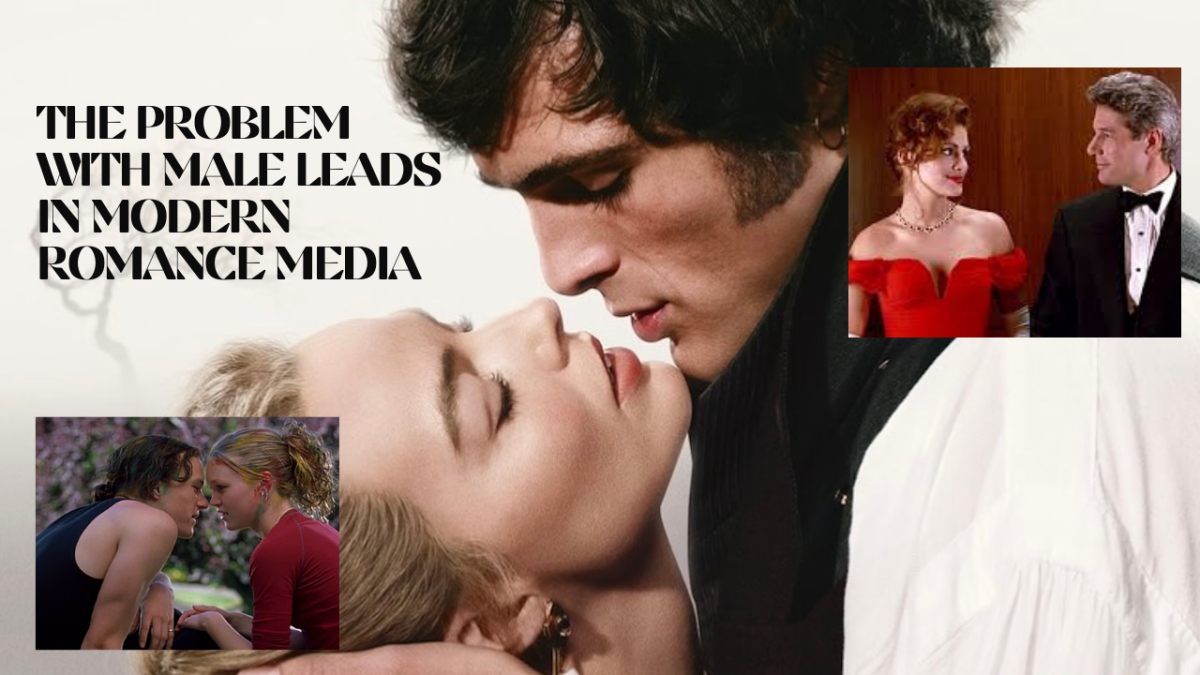
In a romance, the development and character of the love interest are critical to the success of the story. Characters like Noah Calhoun from “The Notebook” and Edward Lewis from “Pretty Woman” are widely considered as the ideal romantic partner because of their growth, realism, and adoration for the main character. However, in current media, male love interests lack these important qualities that allow the story to fall flat.
The male lead in the story should have a clear, understandable reason to pursue the main character, yet in most movies and television shows, their reasons are simplistic or random. Modern love interests are rather portrayed as archetypes rather than their own people, which removes the realism and growth aspect needed for the story’s success.
The modern male love interest lands in three problematic categories: the erotic, the cardboard cut-out, and the toxic. All archetypes lead back to the early 2010s.
The first category the modern male love interest falls into is the erotic, in which eroticism envelops the entire character as a whole, from their appearance to their morality. This type of male love interest’s personality revolves around their looks, one-dimensional characterization, and sexual tension. Additionally, their morality will often be decided on their appearance. 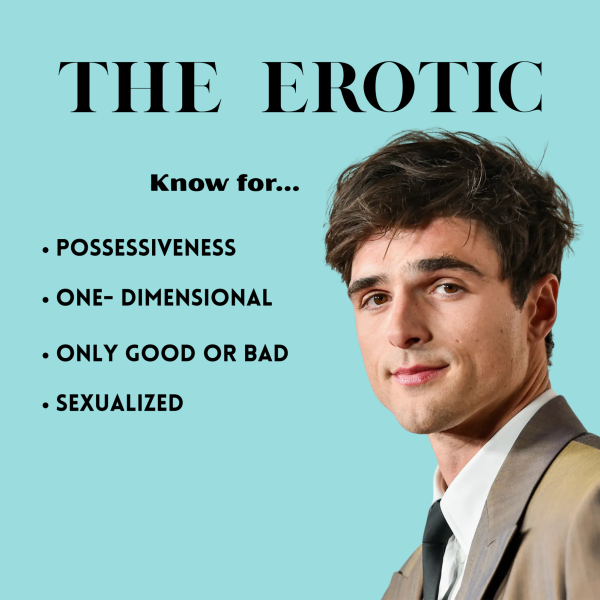
If the media consists of dark romance and the male lead is perceived as dark and brooding, there will be a plot point where the love interest perhaps confronts a rival aggressively claiming the main character is ‘theirs’, or they’ll interact sexually with the main love interest. While, on the other hand, if the plot of the story revolves around moral goodness, the love interest will often appear with softer features and boyish sexual nature, their actions of righteousness are decided in order to place them in the role of a good guy or to further the romance between the main character and them, rather than the actuality of establishing their individual morality.
This trope is prominent in romantic novels, otherwise known as book-tok picks, but also appears in some movies and TV shows. Nate Jacobs from “Euphoria” (2019) is the best example for the darker version, while the lighter version would be Peter Kavinsky from “To All the Boys I Loved Before” (2018) since his ‘noble’ acts are simply to seem perfect for Lara Jean.
The problem with the erotic male love interest is the lack of individuality. These characters cannot stand on their own; they have no individuality stemming from outside the sexualization of their bodies and characters. This frequently leads to undeveloped relationships or a disconnect in relationships.
On one hand, having the male lead be the erotic male archetype can cause the author/screenwriter to force an undeveloped relationship between the main characters: this is caused by the undeveloped character of the male lead, in which there is no development that can justify their growth in a romantic relationship. On the other hand, it can cause the romance to fall flat, as the main focus is now on the relationship and not their individual characters and goals. (things that ultimately fuel a perfectly written romance.)
The next common love interest is the cardboard cut-out: a character whose whole personality relies on the archetypes popularized in fanfiction. These characters often don’t have any character traits of their own; instead, they portray what people often view the tropes they are based on. These characters share similarities to the erotic, however they differ because the cardboard-cutout characterization focuses on their trope rather than their sexualization.
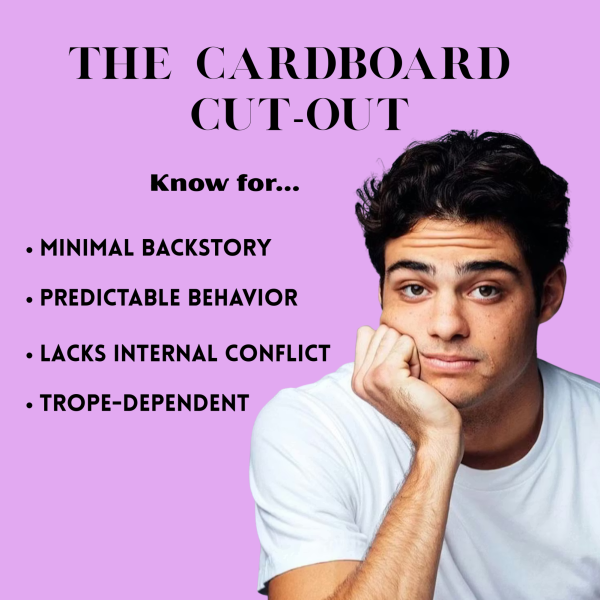
In modern cinema, these characters are frequently included in the newest auditions to the Romance genre: “Red, White, & Royal Blue,” “The Kissing Booth,” and “To All the Boys I’ve Loved Before.” These titles rely on tropes such as fake dating, best friend’s older brother, and enemies-to-lovers. It begs the question: can these characters’ romances survive without relying on the tropes?
Personally, I think character relationships fail if they solely cater to a trope. The cardboard-cut out love interest doesn’t develop his own identity outside of what fanfiction usually characterizes the trope to be.
For example, Noah from “The Kissing Booth.” Noah embodies the fanfiction trope of the best friend’s brother, where his brother claims him to be off limits, he’s overprotective of Elle, acts cool and sometimes indifferent, and has a history with Elle. Besides the basics, what more is there to his character?
In scenes where Noah is allowed to be his own character and not a representation of his trope, his character is quite boring. His character doesn’t have much depth besides being the ‘bad boy’ character, which itself is contradicted by the second movie, where he becomes a lovey dovey boyfriend to the point his earlier characterization is lost.
Although I criticize the utilization of tropes, I myself enjoy their use as long as tropes are not the main focus, allowing each character to develop themselves and a narrative. My favorite romance movie that uses tropes yet develops its characters and relationship is “Pride and Prejudice.”
The adaptation of “Pride and Prejudice” is full of tropes, like enemies-to-lovers, but the movie also expands on each character. If given a scene with just Mr. Darcy, his character isn’t bland or awkward because he is more than just the grumpy, rich man that Elizabeth ends up with; he has depth on his own personal beliefs and motivations on why he is attracted to Elizabeth.
The main problem the cardboard-cut out brings to the modern romance genre is the lack of character. Character is the foundation on which relationships are built; without it there isn’t much to a romance. Romance and relationships only work if both individuals have differing perspectives and complimentary interactions.
The last stereotype of male love interests is The Toxic. The toxic is a male lead that showcases toxic and abusive traits that are repackaged as passionate acts of love. Compared to the other stereotypes, the toxic has been in romance media beyond the 2020s. 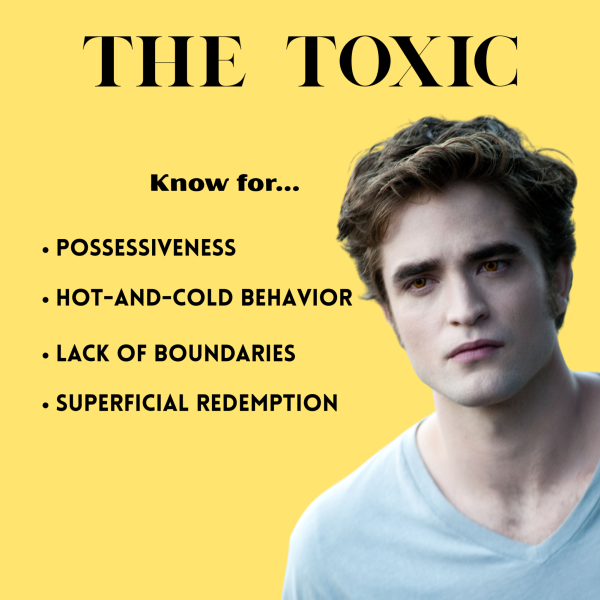
Danny Zuko from “Grease” (1979), Jake Ryan from “Sixteen Candles” (1984), Rhett Butler from “Gone with the Wind” (1939), all characters who have been romanticized as perfect or Ideal love interests, yet have done terrible things to the main character.
Danny Zuko not only does he treat Sandy differently in front of his friends, but he also pressures her to change her style and personality for him, which gives off the message that changing one’s self for their lover can help a relationship. Jake Ryan may have been a dreamboat in the movie, but he gives his drunk girlfriend to another guy, which is a disregard for her consent, and treats women as interchangeable. Finally, Rhett Butler is manipulative towards Scarlett, occasionally uses his wealth to reinforce a power balance in their marriage, and often participates in emotional cruelty and aggression towards his lover.
While these examples can be claimed as outdated, many of our current romance male leads are similar in behavior. The best examples in our current media are Edward Cullen in “Twilight” (2010), Noah Flynn from “The Kissing Booth” (2018), and Nick Young from “Crazy Rich Asians.”
The problem with the toxic male lead is the romanticization of borderline abuse, or even straight-up abuse. Most viewers are teen girls or adult women, both of whom can be victimized in relationships and not realize their situations due to their view of romance. Additionally, the romanticism leads to the excusal of low emotional maturity, abusive behavior, and unhinged anger in boys.
Overall, the current trends in romance media will either bore our future generations or allow them to believe that nothing is wrong with the romance presented. While many of these newer romance movies and tv shows can be perceived as “good,” do they move us like their predecessors?
Will our generation ever have its own Titanic moment? What about our own “The Notebook” rain kiss? When the time comes, what our romance movies, novels, and TV shows will offer nothing to future audiences, not even an aesthetic.
In order to fix the problems of modern romance media, we need to develop narratives and stop relying on tropes! We need to make brand new versions of romance instead of looking to the past for ideas. All it takes is better development in characters, setting, and relationships.