I believe that music has a major impact on mental health. It reduces stress, depression, and anxiety. When selecting music to listen to, I often pick something that relates to how I’m feeling at that time. Music allows you to enhance your feelings, sit with them, and better understand them. It stimulates dopamine and serotonin, improving brain chemistry. Music allows you to feel your emotions deeply and can even help people process emotions they may not be able to put into words.
Based on the survey results I collected, this idea is strongly supported by the student body. Out of 63 responses, 93.7% of people said that music helps their mental health, showing that the vast majority of individuals experience some kind of emotional benefit from listening to music. This overwhelming response highlights how universal music’s impact really is.
Addition
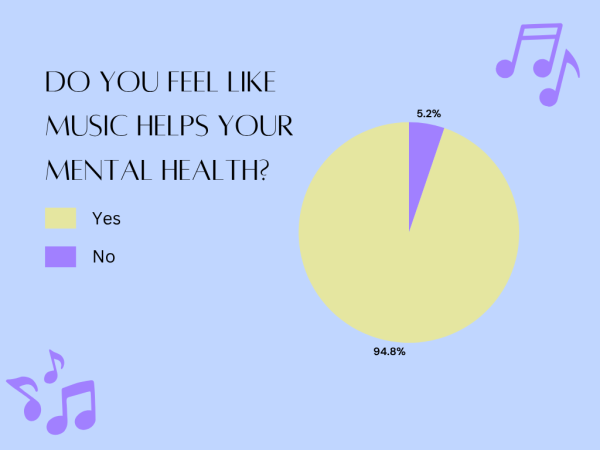
ally, when people are asked about their “go-to” songs when they feel sad, the variety of answers further demonstrates how personal music can be. Respondents chose deeply emotional songs like “All Too Well (10 Minute Version)” by Taylor Swift and “Matilda” by Harry Styles. There were also choices like “Ghost Girl” by Lil Peep and “Someday We’ll Know” by New Radicals. This wide range of genres and styles shows that there is no single genre that helps everyone.
Music acts as a powerful emotional outlet. It helps reduce stress, anxiety, and depression, but also allows people to feel understood. Whether someone is looking to process sadness, escape reality, or simply feel comforted, music provides a safe space to experience and navigate emotions.