Since 2020, 83% of children spend more than three hours a day on a digital device, and their eyes are paying for it.
Spending hours a day in front of screens has led to the emergence of a new eye condition called digital eye strain. DES comes from prolonged exposure to blue-light screens like computers, smartphones, and tablets. Reduced blink rates, prolonged blue light exposure, poor lighting, glare, and improper viewing distance cause the eyes to work
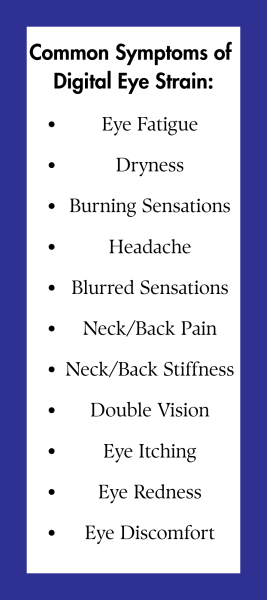
harder and increase eye strain.
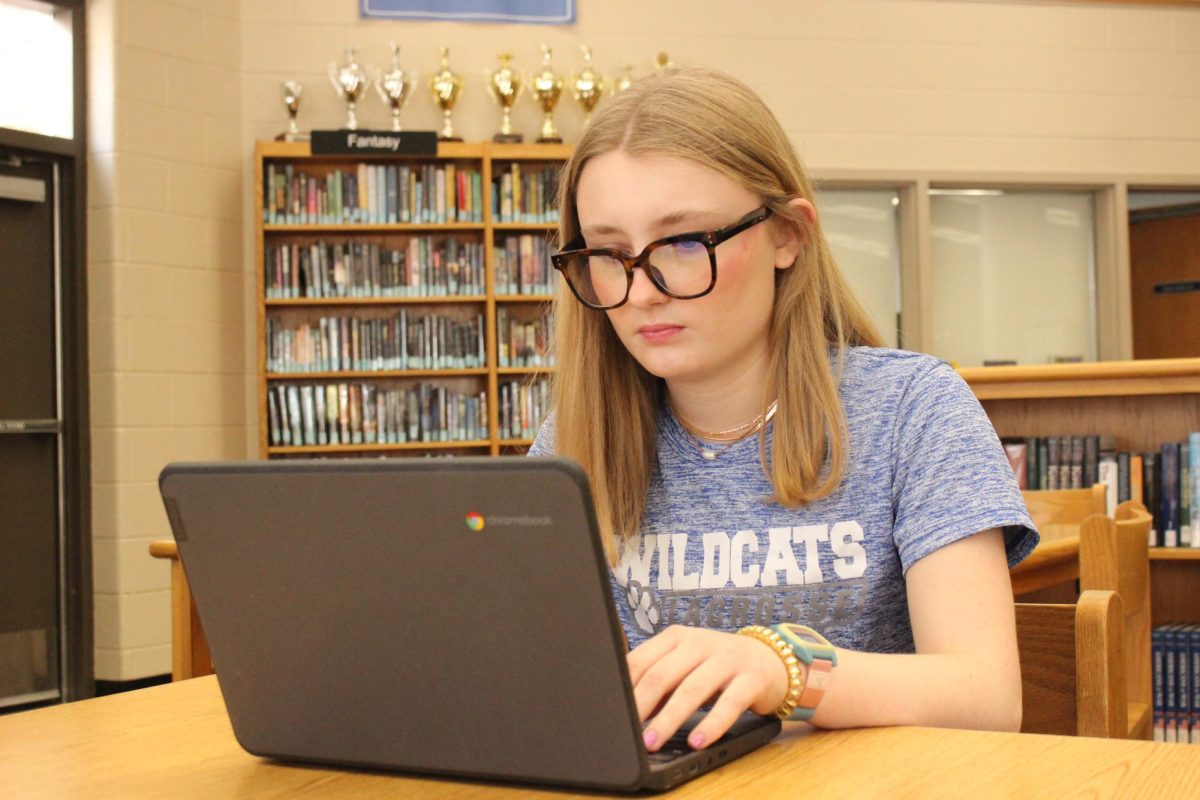
In recent years, blue light glasses have become increasingly popular in both style and functionality. Students show off their personality through the different colors and shapes that various brands offer. While blue light glasses do not fully protect the eyes from the harmful blue light rays, they do help students sleep and help the brain from the high stimuli levels of electronics.
Junior Lily Gist wears blue light glasses in order to prevent headaches,
“I try my best to protect my eyes from harmful blue light rays. I ensure that whenever I am on my Chromebook for over 30 minutes that I am wearing blue light glasses,” Gist said.
To prevent strain, it is important to take breaks from screens, for at least 20 seconds every 20 minutes, according to statistics. The 20-20-20 rule is proven to help reduce eye strain, by staring at an object 20 feet away for 20 seconds every 20 minutes, or, if you have worsened eye strain, it’s recommended to take at least a five minute break. Another great way to help ease eye strain is taking a short ten minute break outside once an hour. Apple has adapted a new feature on their newer IOS versions, letting the viewer know when to back up from the screen, as well as a red light feature to protect the eyes and block out all blue light rays.